How to Clean Algae From Floor
Safety First
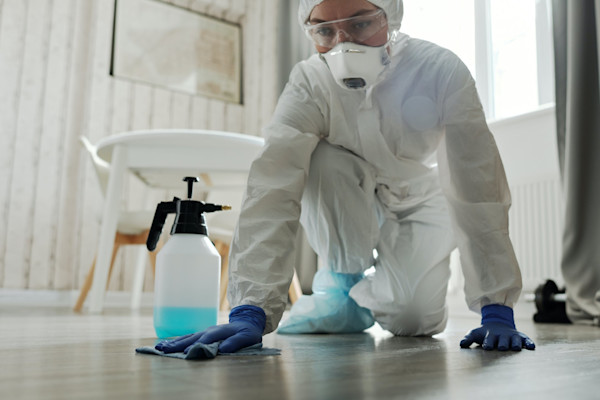
Before you get to work, you must ensure you have and use the proper personal protective equipment (PPE).
Consider that floors with algae can be slippery, and wear shoes with sturdy non-slip soles to avoid accidents.
Wear gloves and glasses or eye shields to avoid direct skin or eye contact with potentially harmful chemicals or debris.
Prepare the Floor
You will first have to get your floor ready for the cleaning process. Following these steps will help you get rid of algae faster and with more ease:
Get Rid of Debris and Obstacles
Eliminate the objects, potential obstacles, and debris on your floor. Depending on how cluttered your floor is, you might need a broom, vacuum, or sturdy brush to free it of any unnecessary items. Remove all the extra dirt so that your cleaning solution will get in direct contact with the algae.
Identify the Floor Type
Before using any chemicals on your floor, you need to know what type of floor it is and what you should use on it. Not all cleaning products are suitable for all types of flooring, not even those labeled “universal.”
Use The Appropriate Cleaning Solution
Using the wrong cleaning product for your type of floor will present two significant risks: you could damage your flooring or not get the expected results. There are endless floor types and cleaning products suitable for all of them.
If you are cleaning outdoor flooring, you can use a mix of dishwashing liquid and water to get the desired results. The ratio should be one cup of dishwashing liquid such as Sunlight to four liters of water, but you can increase the quantity as needed. For more severe algae growth, use an outdoor cleaner intended for heavier tasks.
To get rid of algae on an indoor floor, you need to consider the material of your floor, such as tiles, wood, linoleum, etc. Choose a cleaning product made for your floor material that is appropriate for indoor use. You can try a Handy Andy suitable for your floor, designed to eliminate even the most stubborn dirt.
Cleaning The Algae
You are ready now to target the algae and eliminate them. Here are the key elements to take into account:
Choose Your Tools
Use the right tools according to the type of floor and the severity of the algae growth. You want the tools you use to be efficient but not scratch or damage your flooring in any way.
Consider the following cleaning tools:
- ✦
Scrubbing pad or stiff cleaning brush
- ✦
Pressure washer for outdoor surfaces
- ✦
Non Abrasive tools for indoor flooring with a sensitive surface
Apply the Cleaning Solution
Regardless of the cleaning solution you use, apply it directly on the algae. Let it sit between five and 15 minutes to loosen the algae.
Scrub with the Correct Pressure
Start scrubbing the affected area with enough pressure to dislocate the algae from the surface of your floor. If you use a pressure washer, start with a low level of pressure and increase it as needed.
You will need to scrub more vigorously on areas where the algae growth is more severe. This means that you will have to scrub twice or even three times on the same spot until you see the algae coming off of it.
Rinse The Floor
Once you have scrubbed the entire floor and dislodged all the algae growth, you need to rinse the area diligently. Use clean water to eliminate any residue from the cleaning product and algae growth.
For indoor floors, you can use a clean cloth or a mop; for outdoor flooring, you can use a pressure washer on the lowest setting.
Prevent Future Algae Growth
As we all know, it is always wiser to prevent such a problem so you don’t have to worry about it. Here are some tips you can apply:
- ✦
Keep the moisture under control
Ideally, you want to keep moisture to a minimum. If needed, you should consider improving your drainage system. It is crucial to avoid the accumulation of water, which facilitates algae growth.
- ✦
Maintain the correct ventilation and sunlight
Keep your space well-ventilated and allow direct sunlight to enter your room. If you have to trim surrounding trees or vegetation hindering sunlight, do that.
- ✦
Keep your floor clean
Regular cleaning is the key to maintaining the quality of your floor but also preventing algae growth. Set up a cleaning routine and follow it through to avoid such hassle.
For more practical cleaning tips and tricks, visit Cleanipedia today!