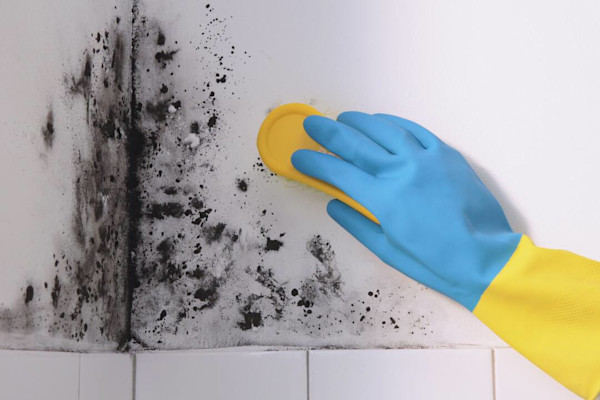
Key Steps to Fighting Bathroom Ceiling Mould:
When cleaning mould on a bathroom ceiling, remember these steps:
- 1
Use Domestos Thick Bleach and water to remove marks.
- 2
Spray white vinegar to kill the mould.
- 3
Wash down the wall before letting it dry thoroughly.
Warm and damp: bathrooms are the ideal breeding ground for mould and bacteria. Pesky black spots can ruin paint and turn your space from dazzling to drab in a matter of days - that's why cleaning mould off bathroom ceilings and other surfaces is essential. We’ve got all the tips you need to effectively clean mould off the bathroom ceiling.
A dehumidifier can soak up moisture and prevent damp walls when it’s too cold to open windows, preventing you from cleaning mould on the bathroom ceiling so often.
How to Get Rid of Mould on the Bathroom Ceiling?
The first step to cleaning mould from a bathroom ceiling is to find a product that really works, like Domestos Bleach. The best way to clean mould off the ceiling is by following a proven method unless you’re conducting an experiment.
Before using any new product, make sure you test it on a small area first. Then it's time to learn how to remove mould from the ceiling:
- 1
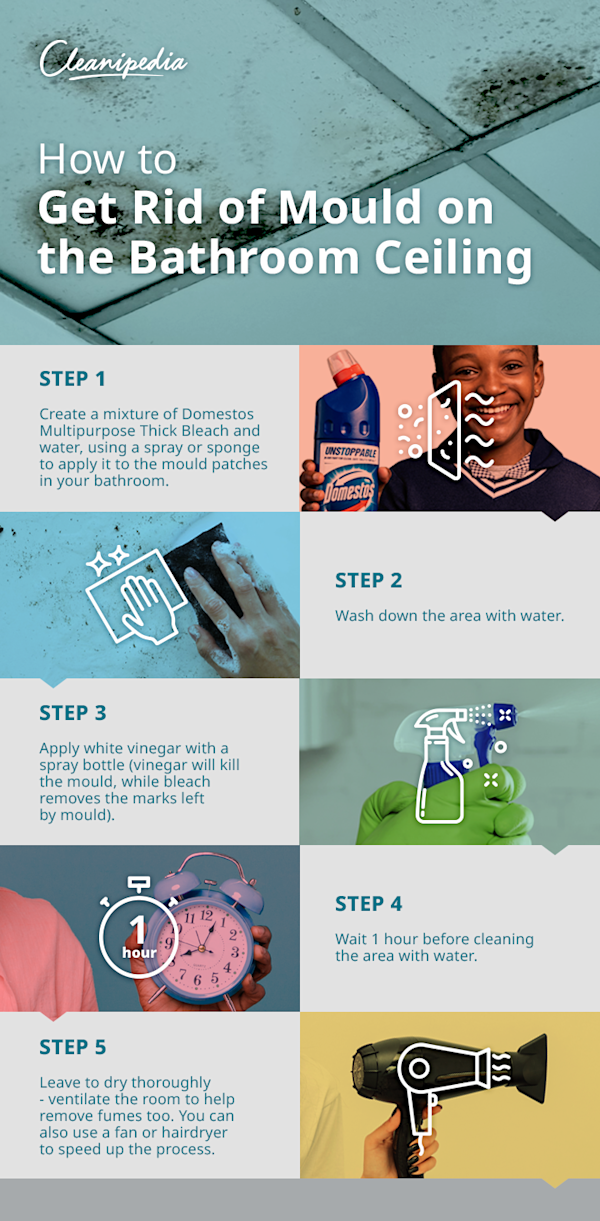
Create a mixture of Domestos Multipurpose Thick Bleach and water, using a spray or sponge to apply it to the mould patches in your bathroom.
- 2
Wash down the area with water.
- 3
Apply white vinegar with a spray bottle (vinegar will kill the mould, while bleach removes the marks left by the mould).
- 4
Wait 1 hour before cleaning the area with water.
- 5
Leave to dry thoroughly - ventilate the room to help remove fumes too. You can also use a fan or hairdryer to speed up the process.
How to Prevent Moulding on the Bathroom Ceiling?
Once you’ve learnt how to remove mould from a bathroom ceiling using bleach, it’s time to make sure those black patches never come back. Here are some tips you can follow:
- ✦
Keep good air circulation by opening doors and windows - particularly after hot showers or baths.
- ✦
Wipe down wet walls after showers.
- ✦
Use an anti-mould paint or coating for problem walls.
- ✦
Use a dehumidifier to keep moisture in the air from creating damp walls.
- ✦
Wipe down your walls with white vinegar whenever you see mould starting to appear.
Once you know how to keep mould from ceiling areas and walls for good, you’ll never have to deal with annoying dark patches again! Remember, prevention is the key, so always stay one step ahead and you’ll reclaim your bathroom in no time. Check out more of our mould tips to clean the rest of your home!
Bleach Safety Warning!
Never mix any other cleaning ingredients with bleach as it could create a toxic gas. Wash your ceiling with bleach first, then apply the white vinegar solution separately.