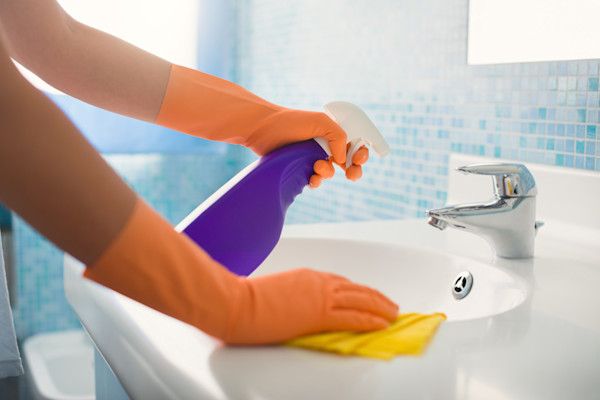
Safely Disinfecting with Bleach
Before you start, it is essential to ensure you use bleach safely. This ensures that you can disinfect your home properly and get the most benefit from it.
Ventilate the area: When working with bleach, it is important to properly ventilate since the fumes can be toxic. Turning on some fans and tackling the dilution of the bleach outside can also be helpful.
Use safety gear: There is always a risk of bleach burning your eyes and skin since it is a corrosive substance. Use safety goggles to protect your eyes in the event that the bleach splashes. You should also wear rubber gloves to protect your wrists and hands. Since bleach can damage your clothing, an apron can also be helpful.
Do not mix with other chemicals: Bleach should only be mixed with water to dilute it. Mixing it with other chemicals can result in highly toxic gases. For example, you can produce chloramine gas if you mix it with ammonia, which can be deadly.
How to Disinfect a Surface Properly with Bleach
It is essential that you follow the steps in the correct order to disinfect your home with bleach effectively. This will ensure that the process goes smoothly too.
Choosing the right bleach: Depending on your preference you can choose either a scented or unscented bleach for disinfecting surfaces. Pick a concentration of not less than five to six percent bleach to get the most effective results. This concentration level also ensures no residual smells and easy dilution. We recommend using a good quality bleach like Domestos.
Prepare the surface: Take two to three drops of dishwashing liquid, such as Sunlight Dishwashing Liquid, and some warm water and mix them. With a washcloth or sponge, scrub the area to remove any dirt and dust accumulation. It is important to remove this before using bleach to disinfect most effectively.
Rinse the surface: Use clean water to rinse the area to remove any residue left behind by the dishwashing liquid. Make sure also to use a clean washcloth or sponge for this step. This also helps to prevent any potential reaction between the bleach and dish liquid.
Dilute your bleach: Take five litres of cold water and add a quarter cup of bleach to it. Make sure to measure properly to ensure the right level of dilution. Never use hot water since it will damage the bleach's active ingredient and make it ineffective for disinfecting.
Disinfect the surfaces: Using a clean washcloth or sponge, dip it into the diluted bleach and wipe down the surfaces that you cleaned. Always let the surface air dry to ensure dull disinfecting. On average, bleach takes about 10 minutes to go to work on a hard surface and thoroughly disinfect it.
Disinfecting Mouldy Surfaces with Bleach
Bleach is effective for removing mould from hard surfaces throughout your home. Just make sure never to use it on wallpaper and other porous surfaces because it can damage them.
Dilute your bleach: When working to disinfect mould on a hard surface, take 4 litres of cold water and add one cup of bleach to it.
Scrub the surface: Before using your diluted bleach, use a stiff brush to scrub the rough surfaces from which you will remove mould. This will help break it up so the bleach can better penetrate it.
Clean the mouldy surfaces: Take your washcloth or sponge and soak it in your diluted bleach mixture. Make sure that it fully penetrates and then gently wring out the excess. Wipe down the mouldy areas and soak the washcloth or sponge again to ensure the surface gets wet.
Rinse the surface: Since you are using a stronger bleach mixture, you have to rinse the surface after cleaning it with bleach. You risk discolouring or damaging the surface if you do not do this. Use clean and cool water, and rinse well until all the bleach is gone.
Allow the area to dry: Once you thoroughly rinse the area, you should let it dry completely. Avoid touching it or placing any objects on the surface for at least 10 minutes so that it has time to air dry completely.
Keeping your home clean and disinfected is not difficult, but it definitely requires taking the right steps. Bleach is the best product for the job if you use it properly. Always prioritise safety and ensure that you are diluting it correctly for the job at hand. This will ensure that your home is clean and healthy and that the task of disinfecting it is as quick and easy as possible.
Visit Cleanipedia today to learn more about disinfecting with bleach.
