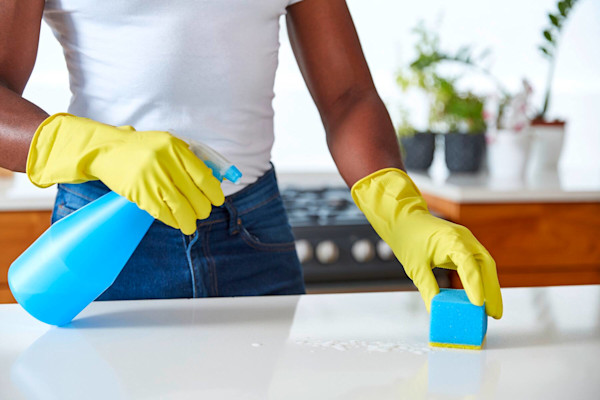
Different types of disinfectants exist, from natural, non-toxic ones to extremely toxic industrial-grade disinfectants. While using disinfectants in your home is essential, using the right type of disinfectant is equally crucial.
Properties of a Good Disinfectant
Disinfectants are used to kill disease-causing pathogens as efficiently as possible. While doing this, they shouldn't damage body parts or surfaces. The properties that characterise good disinfectants include:
- ✦
Stable upon storage and should not undergo any chemical change.
- ✦
Good compatibility with the skin, mucous membrane, and other materials.
- ✦
Odourless or with a pleasant odour.
- ✦
Non-toxic to humans or corrosive.
- ✦
Sufficient penetration depth.
- ✦
Speedy action.
- ✦
A broad spectrum of antimicrobial activity.
Types of Disinfectants Based on Efficacy
Disinfectants are made of different active ingredients, and consequently, a disinfectant can be effective against some microorganisms and ineffective against others. Based on their activity spectrum, disinfectants can be categorised into the following types:
Virucidal
Virucidal disinfectants deactivate or destroy viruses, protecting against viral diseases. However, viruses aren't all the same, and some active ingredients are only effective against certain viruses called "enveloped viruses." Consequently, virucidal disinfectants can be distinguished based on the viruses they're effective against.
- ✦
Virucidal: These are effective against enveloped and non-enveloped.
- ✦
Limited Virucidal Plus: Besides being effective against enveloped viruses, these disinfectants are effective against adenoviruses, noroviruses, and rotaviruses.
- ✦
Limited Virucidal: These disinfectants act against enveloped viruses like measles and coronaviruses.
Bactericidal
Bactericidal disinfectants are disinfectants that are effective against bacteria. These disinfectants are those applying:
- ✦
Active oxygen, such as hypochlorites and wet chlorine.
- ✦
Active oxygen.
- ✦
Phenolic compounds, such as phenols and cresols.
- ✦
Iodine, such as Lugol's solution and iodinated nonionic surfactants.
- ✦
Concentrated alcohols, such as ethanol.
Bactericidal disinfectants may only contain a bacteriostatic agent. This means the disinfectant will only inhibit the multiplication of bacteria but not eliminate them.
Sporicidal
Spores are cells that certain bacteria and fungi produce. These cells can cause health problems if inhaled by people sensitive or allergic to them. Active ingredients that render bacterial or fungal spores incapable of germination are known as sporicides. Spores have thicker walls and are more highly resistant than bacteria and fungi. Consequently, only a few disinfectants are classified as sporicidal. Sporicidal disinfectants include reactive oxidants, such as hydrogen peroxide, chlorine, ozone, and peracetic acid.
Fungicidal
Fungicidal disinfectants act against fungal cultures. These disinfectants are only effective against existing cultures and do not affect fungal spores.
Types of Disinfectants Based on Their Chemical Composition
Alcohols
Alcohols are effective against many bacteria when diluted in water, though higher concentrations are required to disinfect wet surfaces. Alcohol-based disinfectants denature the proteins of bacteria, fungi, and viruses and disrupt their cell walls. However, they don't kill all germs and are the wrong choice for destroying bacterial spores.
Hydrogen Peroxide
Hydrogen peroxide is an effective disinfecting agent against various bacteria, viruses, yeasts, fungi, and spores. Hydrogen peroxide disinfectants are great surface cleaners. Under normal conditions, they are stable, safe, and environmentally friendly.
Peracetic Acid
Peracetic acid-based solutions are sporicidal, fungicidal, bactericidal and virucidal. Generally, they are more effective than hydrogen peroxide and are often used in health facilities to disinfect medical devices, endoscopes, and hemodialysis.
Chlorine and Chlorine Compounds
Chlorine-based disinfectants are effective against microorganisms, including resistant viruses, and are highly recommended for cleaning bodily fluids. Hypochlorite is the most commonly used chlorine disinfectant, effectively killing viruses, bacteria, and fungi. Sodium hypochlorite is commercially available as household bleach. An example is the Domestos Multipurpose Thick Bleach.
Phenolics
Phenolics-based disinfectants are effective against pathogenic bacteria, fungi, and viruses. These disinfectants' antimicrobial activity penetrates and disrupts harmful microorganisms' cell walls. However, these products are not effective against spore-forming bacteria.
Quaternary Ammonium Compounds (Quats)
Quats are a popular disinfectant choice, especially in hospitals and institutional settings, because they are inexpensive and exhibit quick action against various microorganisms. They are used for cleaning and displaying both mycobacteriostatic and sporostatic activity.
What to Consider when Choosing a Disinfectant
When choosing what disinfectants to use in your home, you should consider these four things:
Effectiveness
The disinfectant you choose should be effective against the microorganisms you are most concerned about. To be safe, choose a disinfectant that is effective against a wide range of microorganisms.
Safety
Some disinfectants are toxic, others are corrosive, and others have an unpleasant odour. Before choosing a disinfectant, make sure it is safe to use. Check the product's toxicity and flammability ratings and watch for the required personal protective equipment (PPE).
Wet Contact and Kill Time
Disinfectants are made to kill specific microorganisms in a specific amount of time. And to kill pathogens, they need to be wet on the surface being disinfected to be actively working. A typical kill time is between thirty seconds and five minutes, with the disinfectant staying wet the entire time. However, alcohol-based disinfectants evaporate faster and may be dry before their required contact time.
Ease of Use
While applying some disinfectants requires multiple steps that may be hard to follow, others are quite easy to apply. Go for an easy and ready-to-use disinfectant that's effective against a broad spectrum of microorganisms.
Fortunately, most disinfectants work against a wide range of pathogens simultaneously. However, before choosing one, ensure it is the product that will serve your needs adequately. Having and using the right disinfectant products will help prevent diseases and infections in your home, saving you a lot of trouble and expense down the road.
Visit Cleanipedia for more helpful cleaning and maintenance tips.
